The Times They Are-A Changin’

The lyrics to Bob Dylan’s iconic song of 1964, The Times They Are A-Changin’ seem more apt than ever. With the impending divisive US presidential election, Covid 19 and the huge challenges in its wake, the UK setting itself adrift from the EU – the biggest trading bloc in the world – and the climate crisis, you couldn’t have imagined a more toxic bunch of hurdles before us. Dylan’s words in the third verse, Come senators, congressmen…, apply to all politicians wherever they areLet’s hope they heed the call.  

Come gather ’round, people
Wherever you roam
And admit that the waters
Around you have grown
And accept it that soon
You’ll be drenched to the bone
If your time to you is worth savin’
And you better start swimmin’
Or you’ll sink like a stone
For the times they are a-changin’

Come writers and critics
Who prophesize with your pen
And keep your eyes wide
The chance won’t come again
And don’t speak too soon
For the wheel’s still in spin
And there’s no tellin’ who
That it’s namin’
For the loser now
Will be later to win
For the times they are a-changin’

Come senators, congressmen
Please heed the call
Don’t stand in the doorway
Don’t block up the hall
For he that gets hurt
Will be he who has stalled
The battle outside ragin’
Will soon shake your windows
And rattle your walls
For the times they are a-changin’

Come mothers and fathers
Throughout the land
And don’t criticize
What you can’t understand
Your sons and your daughters
Are beyond your command
Your old road is rapidly agin’
Please get out of the new one
If you can’t lend your hand
For the times they are a-changin’

The line it is drawn
The curse it is cast
The slow one now
Will later be fast
As the present now
Will later be past
The order is rapidly fadin’
And the first one now
Will later be last
For the times they are a-changin’

Bob Dylan

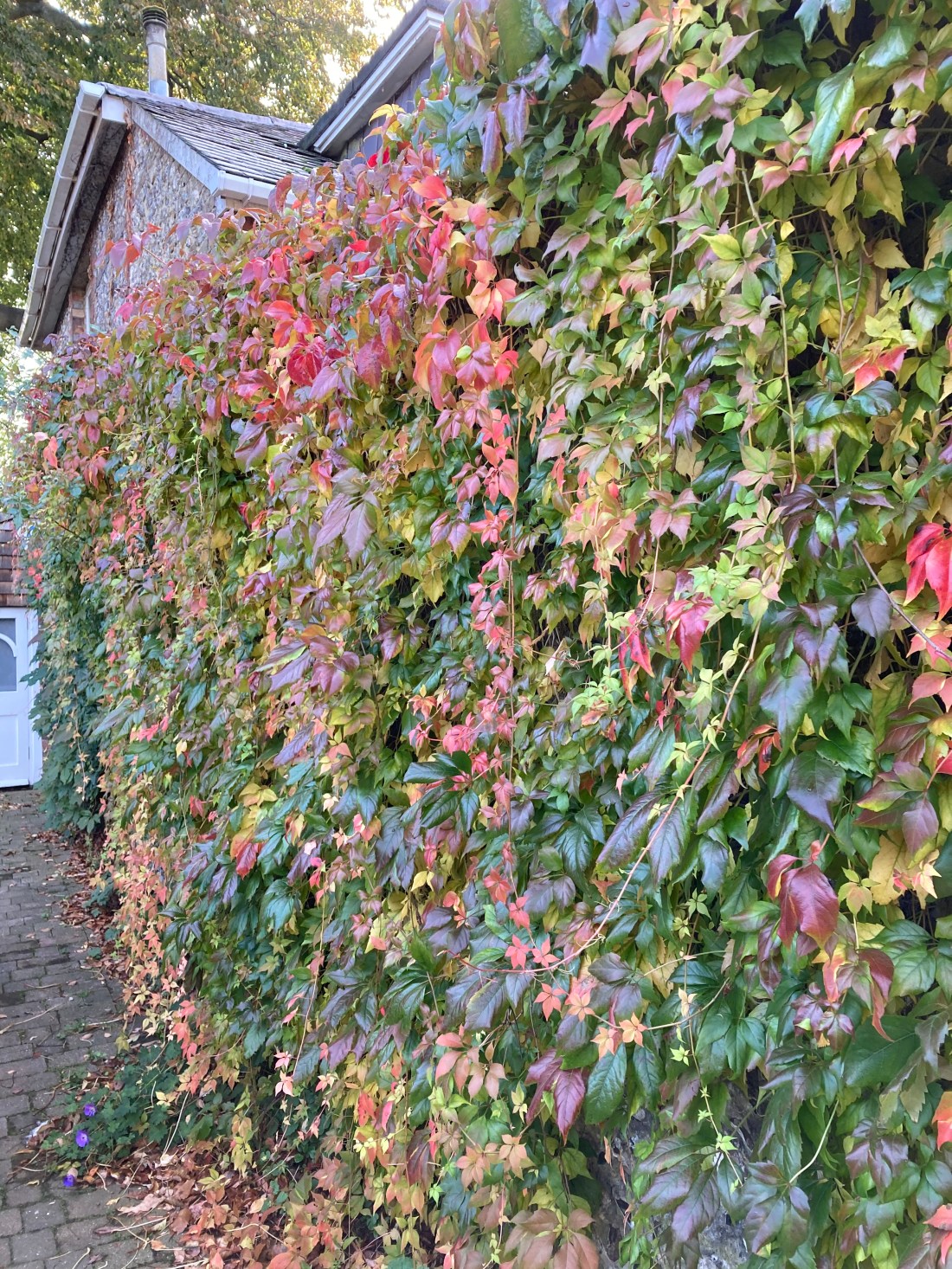
Meanwhile, back home, where weak sun shines on fading leaves, soon to explode in a riot of autumn colours before fluttering down to the ground, plants well past their best slowly hunker down for winter, tall grasses flutter in the light breeze and probably stay that way until the first frost freezes their wispy tufts hard and makes them look like frozen spears, it’s autumn. 

My latest book, Otto and Frankie, is available in all formats. It’s different from anything else I’ve written and took almost three years in the making. 

It’s about a dying man’s fight against injustice, his wife’s unusual affair, and the love from his long-lost daughter. 

I’m told it’s a compelling read.
amazon.co.uk. amazon.com.

Processing…
Success! You're on the list.


Days without end

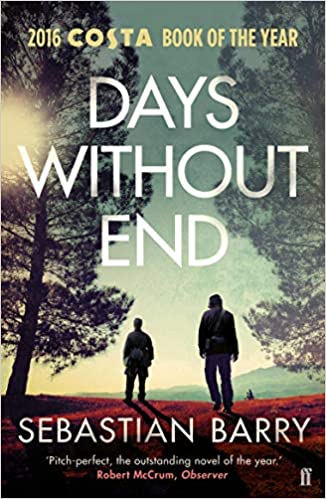
Days Without End is the title of the epic and intimate novel by Sebastian Barry that manages to create spaces for love and safety in the noise and chaos of history, and one of my best reads.  It could also be an apt description of the extraordinary troubling times the world is going through. The daily dose of depressing news seems relentless.

But I’m an optimist, inspired by how mankind and individuals have overcome terrible events and personal traumas to build a better future. ‘Hope springs eternal,’ first used by an English essayist in 1732 describing mankind’s continuum of hope, sounds a better slogan to me.

I get that there has to be a plan and belief to overcome adversity but think how Nelson Mandela would have coped with thirty years imprisonment if he hadn’t had hope,  how hope and belief drove Alexander Fleming to discover antibiotics, and how the British people during the Second-World-War hoped the war would end the way it did.

Without hope history would have been very different.

Let me share some reasons for hope. 

Firstly, the virus. 

Many people in the know are saying vaccines will be available for Covid-19 next year, even a chance that they’ll be one ready for selected immunisation by the end of the year: China and Russia say they are vaccinating key workers already. The earlier vaccines may have limitations, but they’ll start to stop the virus’s spread, and further development will improve them, as has happened in almost every medical advance in history. Several treatments are now in use by doctors and medical staff to lessen the severe effects of the virus, bringing the death rate down. 

The doomsters say vaccines may not work, it’ll take several years to vaccinate the world’s population, they’ll be many non-vaxers, and more. Oh yeah; but look at the positive. At the outset of the pandemic, commentators said it’ll take years to have a 100% effective vaccine, and it may, but at the least, in just over nine months, we have several vaccines in trails that are showing promising results. That’s positive, and meanwhile new treatments for Covid patients  will be discovered while the existing ones improve. Man’s ingenuity knows no bounds. We can send a rocket millions of light years away in space to land on a spec on a distant planet.   

The virus is devastating, a million people have died worldwide, but we may be at the beginning of the beginning, and a tiny spec of light flickers at the end of the tunnel.

Climate Crisis

This week Marks and Spencer announced the end to selling milk and milk products produced from cows fed on soya grown in destroyed rain forests. In future they will only sell milk products from cows fed on an environmentally friendly feed. This is a huge step to push back on the climate crisis, and, I’m sure, many more food retailers will follow, if they already haven’t.

In Turkey, where coral reefs are dying because of global warming and man’s sea pollution, scientist have discovered ways to transplant live coral alongside almost extinct coral, which in time regenerates the reef, saving it, and bringing it back to full health.  

Also this week from China: “We aim to have CO2 emissions peak before 2030 and achieve carbon neutrality before 2060,” Chinese President Xi Jinping told the United Nations General Assembly via a video link on 22 September.

All of this is encouraging, to be applauded, fuelling my optimism that man is inherently progressive, and despite setbacks and some politicians trying to manipulate events for their owns agendas, a great many people – scientists, doctors, medical practitioners, commentators, campaigners, social workers, and even sane politicians, and many others – are working to make this a better world.

Stay safe.

My latest book, Otto and Frankie, is available in all formats. It’s different from anything else I’ve written and took almost three years in the making. 

It’s about a dying man’s fight against injustice, his wife’s unusual affair, and the love from his long-lost daughter. 

I’m told it’s a compelling read.

amazon.co.uk. amazon.com.

Processing…
Success! You're on the list.

What next?

The book’s published, promotion work is ongoing, I’ve done an interview with a friendly freelance journalist, hoping to find a magazine or newspaper willing to print it, and I’m left thinking about my next project.

I could give the garden an autumn make-over, sign up to an online cooking course, make an extra loaf of bread every day, start a new fitness regime, read more, watch old movies I’ve seen several times, and go for long walks. 

But my yearning to write is strong. I want to create a story again, invent new characters, contrive events, think up dramas, build in suspense, and figure out all the other facets that makes a book compelling. I’ll tend to the garden, make bread, keep fit, investigate new recipes, watch movies, and read, but no more or less than I do now, whereas writing will become my main event. It’s what I enjoy the most. 

First; I’ll be publishing a trio of short stories in October or November. Then I’ll start on a new novel, and whilst writing it, I’ll post my progress and a few snippets on my website, plus more short stories. 

Two of the trio of short stories to be published can be read on this site.

The parents I did not know

The night my characters came for their revenge 

My latest book, Otto and Frankie, is available in paperback and e-book. It’s different from anything else I’ve written and took almost three years in the making. 

It’s about a dying man’s fight against injustice, his wife’s unusual affair, and the love from his long-lost daughter. I’m told it’s a compelling read.

E-book at promotional price until 30 September: amazon.co.uk. amazon.com.

Paperback: amazon.    

Processing…
Success! You're on the list.

A friend calls

My friend Billy (not his real name) who’s a journalist, breezed in on Saturday morning, unannounced. His purpose, he said, as I pushed a coffee his way, was to complement me in person on my latest book, Otto and Frankie. ‘Best you’ve written, and one of the best I’ve read,’ he said. Knowing Billy for some time, someone not flush with complements, and who reads many books, I figured he’d had a touch too much to drink the previous night and was confusing me for someone else. But then he went on to say he wanted to do an interview with me about the book and could we do it right then. Putting back my Saturday gardening plans, I agreed. He didn’t say when the interview would be published, I suspect it won’t, but here’s some of the better bits.

Billy: So? Why did you write Otto and Frankie?

NW: I wanted to write about people dealing with life’s crises; and I thought being told you had three months to live, finding out your wife was having a bizarre affair, and meeting up again with a long-lost daughter – who becomes your greatest admirer and proponent of your values – were tough challenges and could be the human dynamics to drive a story.   

B: Who did you model Otto on? Is he your alter ego?

NW: No, he’s not. But I wanted to create a noble guy with a strong personality and well-liked. I guess I do have similar traits and values to Otto.

B: Do you think Otto was unkind to Holly?

NW: Stand-offish, maybe. No, not unkind. Look; he had three months to live, discovers his wife, who he adored and thought she did him, was having a most unusual affair, and is trying to keep fighting for his cause till his last breath. Confused, sad, but not unkind. I write the stories; readers will form their own opinions.

B: You chose evocative settings with West Wittering and the nearby beach. Do you know them?

NW: I do. We live close to West Wittering and walk on the beach often. The beach is beautiful at any time of the year and all times of the day and tide, and I hope I got that across.

B: You describe Otto’s house and garden as comfortable and stylish, but not much detail. Why’s that?

NW: I wanted the beach, the characters, their actions, thoughts and emotions to be the main events. Too much detail on house décor would have been a distraction. Anyway, the shiny lifestyle magazines do that better than me. 

B: Moving on to Holly’s affair. That sort of thing is quite normal these days. Why did you make a big thing of it? 

NW: You’re right. It is, but if you remember Otto said he wasn’t worried about who the affair was with, just that Holly had an affair at all that threw him. Having only three months to live, and then finding out his wife was unfaithful almost crushed him had it not been for his indomitable spirit and Frankie’s support. 

B: Frankie could not be more different to her father and didn’t really know him. Isn’t it more likely she would have found him and the family rich, posh strangers, said her goodbyes to her father, and headed back to New York?

NW: She did initially find them like you described, but it didn’t last. She soon recognised her father as the kind noble man he was, and found the rest of the family – Holy, and her and Otto’s twin sons – friendly and trying their hardest to make her feel at home. As the days went on, and her admiration for her father grew, she wanted to stay to the end. And of course, deep down, she had a kind, loving nature, repressed by her tough time in New York, but flourished by the time spent with her dad and the family.

B. In the second part of the book, Frankie becomes the protagonist and narrates the book in the first-person. Wasn’t that a bit of a risk, given that Otto’s part was so compelling, and he was clearly such a noble man?  

NW. Well, I drew them as complete opposites intentionally – Otto the good guy, Frankie a bit of a loser. But she came good and delivered on Otto’s goal despite the odds against her. I wanted to show how people can change. 

B: What was the bit you most liked writing?

NW: All of it. I bin bits I don’t like as I go along. But my favourites were Otto and Holly reflecting on the good times, and Frankie’s confrontational meeting with Otto’s brother. 

B: Any plans for the future?

NW: I’m working on some short stories, then a new book next year.

Otto and Frankie, is available in paperback and e-book. It’s different from anything else I’ve written and took almost three years in the making. 

It’s about a dying man’s fight against injustice, his wife’s unusual affair, and the love from his long-lost daughter. I’m told it’s a compelling read.
E-book at promotional price: amazon.co.uk. amazon.com.

Paperback: amazon.    

Processing…
Success! You're on the list.

Elephant leave

‘World’s loneliest elephant’ allowed to leave zoo for better life. (The Guardian)

small zoo in Pakistan, not known for its care of the captive wild animals, agrees to release an elephant back into the wild.  Sounds good, but it’s not quite an open-the-cage-and-let-the animal-run-free job. Kaavan, a cause célèbre for animal rights activists and dubbed the world’s loneliest elephant, lost his partner in 2012 and has slid downhill mentally and physically since then. The zoo, much criticised for its poor conditions – two lions died their recently – bowed to international pressure and agreed to release Kaavan and send him to a large animal sanctuary in Cambodia where he’ll be in the company of many other elephants. Elephants are highly social animals and need the company of their fellow creatures. Let’s hope Kaavan’s new life will banish his blues and bring him back to full health. But he still has a long way to go before his revival is complete. More –  

sense of autumn.

Bare feet on a cold stone floor. Faded lavender with still a few blooms and the last few bees gathering dregs of pollen. Drenched grass in the early morning from autumn dew. A few white butterflies flitting around in the midday warm sun. Leaves floating down from the overhanging trees. It’s coming. Soon it’ll be upon us with all its dramatic colours and suddenly bare trees and ploughed fields. With such an odd world around us, I wonder what it will bring? Change – certainly. A better future – hopefully. Some sense – surely? Read more on smelly autumn

My new book, Otto and Frankie, is now available in paperback and e-book. It’s different from anything else I’ve written and took almost three years in the making. 

It’s about a dying man’s fight against injustice, his wife’s unusual affair, and the love from his long-lost daughter. I’m told it’s a compelling read.
E-book at promotional price: amazon.co.uk. amazon.com.Paperback: amazon

Processing…
Success! You're on the list.

I’ve been away…

I’ve been away for a few days with my wife and daughter and had the good fortune to stay at Capel Courtyard in Kent. It calls itself a B & B, but this is no ordinary B & B, surpassing all my expectations. It was booked for me, and although when told about it I nodded in agreement and said how wonderful it looked, I didn’t really register how magnificent it would be. Dating back to the mid 1800 hundreds, it has been renovated lovingly by the present owners over twenty years. Early in the building work they had to have the courtyard (as shown in the photo) lifted to reconstruct the drains. It’s truly superb and must be one of the best B & Bs in the country. An excerpt from Capel Courtyard’s website follows:  

‘High ceilings, gothic arches, and lots of windows, create a gloriously light and open feel, offering a multitude of differing views of the courtyard and surrounding gardens. Capel Courtyard is principally a peaceful home from home, rather than a hotel. In keeping with this ethos, we do not have TV’s in our bedrooms or reception spaces. WiFi is however available everywhere, and for the less technologically focused there are books and games.

The Courtyard dates from 1860 and originally comprised the subsidiary buildings – stables, cart sheds, coachman’s house and chauffeur’s cottage – to a grand mansion built by the Austen family (relatives of the famous novelist Jane Austen) and designed in Italian gothic style by Thomas Wyatt.’ Capel Courtyard website.

Using this as our base, we spent the time walking in the Kent countryside, visiting delightful gardens, old oust houses, an English vineyard producing excellent wine, and three good restaurants, whose impressive and rigorous Covid 19 precautions made us feel safe. 

It’s surprising how a few days away in a beautiful setting, good company and food, and with interesting places to visit, revitalises and relaxes you, but it did that and more for the three of us. It beats foreign travel and Covid and quarantine worries!

My new book, Otto and Frankie, is now available in paperback and e-book. It’s different from anything else I’ve written and took almost three years in the making. 

It’s about a dying man’s fight against injustice, his wife’s unusual affair, and the love from his long-lost daughter. I’m told it’s a compelling read.

E-book at promotional price: amazon.co.uk. amazon.com.

Paperback: amazon

Processing…
Success! You're on the list.


A calm week…

I think this week’s going to be fun and easy. A few days with my wife and daughter staying in a quaint cottage, wandering around the English countryside, visiting some show gardens, enjoying good food, and two or three books to read. 

But next week should be different. My new book, Otto and Frankie, is officially launched on Friday, 4th September. I’m not expecting my world to turn upside down, it’ll probably be quite normal, but I started thinking about this book in early 2017, finally typing the first words in August of that year, finishing it in autumn 2019, and messing around trying to get it published ever since. So, I’ll have all the promo stuff to do, and then enjoy for a day or two a feeling of achievement and elation. 

Why did it take me so long, you may ask? Well – it’s different to anything I’ve written before. My previous eleven books have been crime thrillers, where normal people find themselves entwined in very abnormal situations and resort to dark deeds. I felt I’d had enough of that. The world’s pretty dark at the moment, and I wanted to try something new.

Otto and Frankie – a dying man’s fight against injustice, his wife’s bizarre affair, and the love from his long-lost daughter – digs into people’s emotions, the life-changing challenges they face and how they cope, grief, raw emotions, love, and above all the triangular relationship between a dying man, determined to the last, with his loving but disloyal wife and his long-lost daughter who he’s reunited with for his last few weeks after twenty years apart. 

I don’t know how Otto and Frankie will be received, but I enjoyed writing it, and hope others will enjoy reading it.  

To pre-order e-book: amazon.ukamazon.com. Buy the paperback now.

The parents I did not know – a short story about a man searching for the father he’d never met – is also written in the same genre and can be read in full elsewhere on this site.

Processing…
Success! You're on the list.

They look so evil

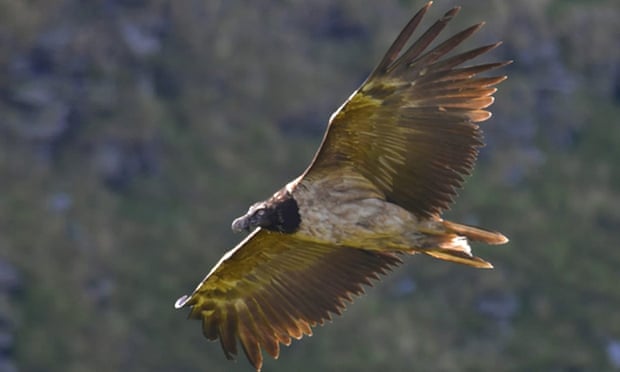
I’ve always been in awe of vultures. Ever since I was young and taken by my parents to see a film, ‘Where No Vultures Fly,’ about ivory poaching in Kenya – sadly still happening – I’ve found all bird predators impressive and noble-looking creatures, but to me the vulture ranks the most magnificent. And so when I read this clip, I wished for more.  

‘A wild, free-flying nine-foot-winged bird of the Alps and Pyrenees; a bone-eating, tortoise-dropping inhabitant of wolf-haunted montane crags; here over the Derbyshire moors, with their grouse and their sadly piping pipits – the very idea seems somehow momentous.

Even as we watched the creature – a second-year, probably female, bearded vulture (Gypaetus barbatus) – sail along the wind-blasted gritstone edge at Shining Clough Moss, it was hard to credit something so expressive of European wilderness. Yet there it floated with barely a flap – massive, glamorous, completely calm – and wheeling away from aggressive buzzards that mithered after it. These lesser predators, which are themselves no mean aerial masters, looked by the side of the giant no bigger than jackdaws. Each one in its entirety was less than one wing’s length of the vulture.

Yet there have been precedents and predictions of just such a visitation to Derbyshire. On 4 June 1927, two griffon vultures were seen in the skies over Ashbourne. Sadly, the record has since been rejected, but there are some who still believe in those birds of nearly a century ago.’ More at The Guardian.

My tears for Beirut

The awful tragedy that befell Beirut last week (Tuesday) was ever so poignant for me. My son lived there for four years with his family and had only recently returned. I’ve been there several times, finding the city charming, interesting, lively, optimistic, and full of generous and hospitable people. My son and his wife have many friends there. He was staying at our house when the devastating explosion occurred. Many inhabitants lost their lives; thousands have been injured, and 300,000 homes have been destroyed. Lebanon was in a crisis before the explosion: the economy in free fall downwards, and Corona Virus taking a heavy toll with hospitals overflowing and unable to cope. Now it’s a catastrophe. Victims of the explosion are being treated in hospital car parks. 

For my son and his family, this is a very personal tragedy, and the same goes for me.

Beirut has been through a great deal: a 15-year civil war, a war with Israel, and a weak and ineffective government whose inefficiencies and corruption are widely believed to have caused the explosion. However, my visits to the city, talking to my son and his wife, and reports I’ve read in the media have led me to believe the Lebanese, especially those living in Beirut, believed the worst was behind them. They wanted change, and yearned for a progressive, safe, and financially sound future. Now their hopes and aspirations have been dashed.   

Media interviews with Beirut’s inhabitants tell of the sadness and catastrophe that’s hit them, but also their resilience. One woman was filmed in her wrecked apartment playing the piano. All around her windows had been smashed, furniture upended and destroyed, precious ornaments and framed photographs broken and scattered around in the debris. When asked if she was moving, she shook her head and said firmly, with her husband by her side, ‘No, we’ve lived here for 40 years and we will continue to live her. We’ll get through this.’             

Her resilience and bravery is impressive, but it’ll take more to get Beirut and Lebanon through this appalling calamity.   

How can you help        

Otto and Frankie, my latest book, is now available as a paperback. The e-book version, out on September 4, is available to pre order.

amazon uk

amazon com

Processing…
Success! You're on the list.

When sundowners heal

It’d been a long day. I’d spent the morning cleaning the rampant bindweed from the pond, cut back the geraniums that’d past their peak, tidied the garden shed I should have tidied months ago, disturbing a mouse in the process, no doubt hacked off at losing his warm spot behind the logs, and tried without success to fit a new gas cannister to the BBQ – I’d bought the wrong one! All this frenzied activity on a Sunday was in preparation for my son and his family coming over from France for a week. When he took up his new posting in early January after four years in Lebanon, we were looking forward to seeing them more often and a few weekends in Paris. Little did we know coronavirus was lurking around the corner.

At about 5:30 pm, limbs aching and my throat parched, I dropped into one of the rather dilapidated garden chairs – hoping I wouldn’t worsen it’s decaying condition – holding a long glass of water. A few minutes later, the water gone and beginning to think about my supper, I realised a proper drink was needed to resuscitate me. After fixing myself a giant-sized gin and tonic, I returned outside to sit and watch the sun disappear behind the tall conifer trees the other side of our garden wall. My wife away for the night, I spent the next half-an-hour sipping on my drink while watching two beautiful dragonflies flit around, and bees, too many to count, work hard gathering pollen from the lavender bushes. 

By seven, having fixed the correct gas cylinder to the BBQ, I started to cook my supper with another large G & T close by. About half-an-hour later, I sat at the garden table looking at a plate of crispy king prawns and squid, peppers, fennel and lightly smashed new potatoes, topped with a spicy BBQ sauce and accompanied by a glass of red wine.  

Later, after sunset, with twilight descending and one or two bats swooping low, back and forth across the patio, I felt grateful. After a day’s toil, I’d been able to sit in our garden, revived by food and drink, and surrounded by nature. I was lucky, many are not so privileged.